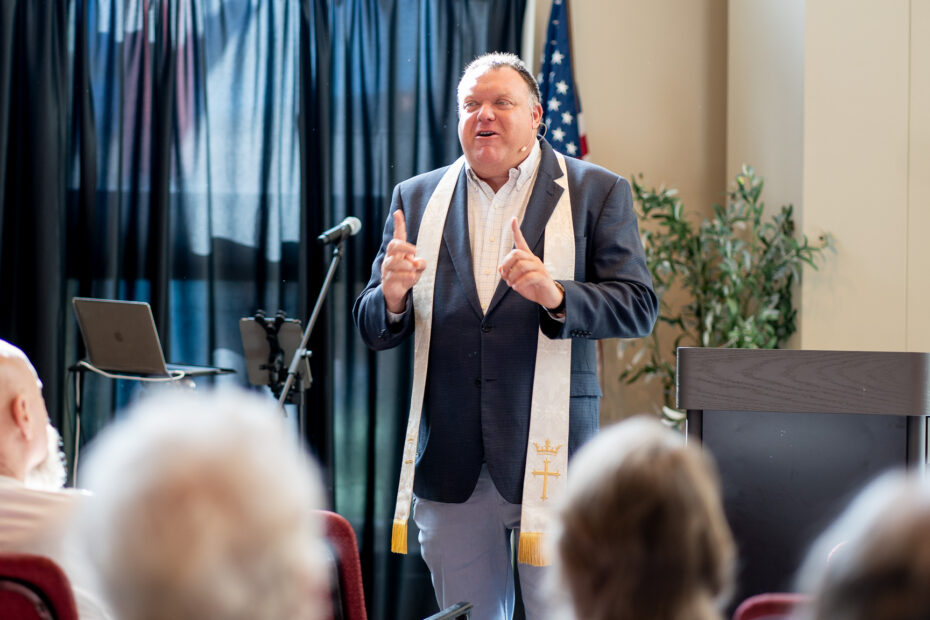
Over the past few weeks, we have been talking about getting our lives in order—not getting everything under control, but learning to put first things first. Jesus calls us to seek first the kingdom of God, and we have also considered how to put money in its proper place. But beneath those conversations is another question: How do we actually live this way over time?
Good intentions need a way of life
I have been learning this personally. At the end of last year, I began a medically supervised nutrition program. It gave me structure: foods to choose, rhythms to follow, and accountability. For about six months, I did well. I lost a significant amount of weight, felt better, and my doctors were pleased.
When the program ended, I thought I could take it from there. I had followed the plan for six months; surely I knew what to do. But over time, some old patterns returned. I had become good at following a plan, yet some of the deeper patterns beneath my choices had not changed as much as I thought.
That has been humbling. In some parts of life, I am disciplined. I can study, prepare, work hard, and lead. In other areas, if I am not intentional, I let life make the decisions for me. And life is always happy to do that.
Our spiritual lives can be much the same. We can hear a sermon, read a book, take a course, or make a commitment—all good things. But we do not become like Jesus through good intentions alone. Christ forms us over time through a life intentionally arranged to remain in him.
Remain in the vine
In John 15:1–11, Jesus uses the image of a vine and its branches. He says he is the vine, we are the branches, and his Father is the gardener. The word he returns to is remain: remain in him, remain in his words, remain in his love.
“I am the vine; you are the branches. If you remain in me and I in you, you will bear much fruit; apart from me you can do nothing.” —John 15:5
Jesus does not say, “Try harder.” He says, “Stay connected to me.” A branch does not manufacture grapes by gritting its teeth. It bears fruit because it remains connected to the source of its life. Jesus is that source.
This is the foundation of what we mean by a Rule of Life. A Rule of Life is an intentional pattern of practices that helps us remain connected to Jesus and become the people he is forming us to be.
Think of a grapevine growing along a trellis. The trellis does not give the vine life; it gives the living vine structure in which to grow. Jesus is the vine. A Rule of Life is only the trellis. Prayer, Bible reading, Sabbath, small groups, and service are not the source of life. Jesus is. These practices help us make room to remain in him.
Your life is already forming you
Every one of us already has a Rule of Life, whether or not we have written one down or called it by that name. Our calendars, phones, work, rest, relationships, spending, meals, and the first and last moments of each day all shape our lives. We all have patterns. The question is not whether we have a way of life, but what our present way of life is forming us into.
Sometimes the life we say we want and the life our habits are producing are two different things. That is why I have been asking myself a harder question about the studies and resources we have explored together at The Gathering Place: Did we simply learn good material, or did it become a way of life?
Information is not the same as formation. Finishing a course is not the goal, and neither is knowing all the right answers. The goal is that, over time, our lives increasingly take the shape of Jesus.
A long obedience in the same direction
Christians across the centuries have understood that following Jesus calls for an intentional life shaped by prayer, Scripture, worship, community, mercy, and service. In our Wesleyan tradition, we often call these practices means of grace—not ways to earn God’s love, but ordinary ways we make ourselves available to the Spirit’s work.
Eugene Peterson described discipleship as “a long obedience in the same direction.” Transformation usually does not happen overnight. It happens over a lifetime of remaining, returning, practicing, falling down, getting back up, receiving grace, and remaining again.
So I do not want you to leave thinking you need to add a dozen new spiritual disciplines to your life. Start smaller. At The Gathering Place, we have begun describing discipleship in three simple movements: Formed in Jesus. Known in community. Sent in love. What if these became more than words we use to describe our church? What if they helped us examine the shape of our lives?
Formed in Jesus: What practice helps me remain in Christ? Is there space in my life for prayer, Scripture, silence, Sabbath, or worship?
Known in community: Who truly knows me? Who knows how I am doing and can encourage me, challenge me, pray with me, and walk alongside me?
Sent in love: Where am I intentionally giving my life away? Are generosity, service, hospitality, and love built into the pattern of my days?
Being sent in love can also mean walking with someone toward Jesus. One of the great joys of Christian life is discovering that God may allow us to be one link in another person’s faith journey—to pray, listen, invite, and walk beside them. What might change if we made room in our lives to build genuine relationships with people who do not yet know Jesus and invite them toward him?
Begin with the love of Jesus
Notice where Jesus brings this teaching in John 15: “As the Father has loved me, so have I loved you. Now remain in my love.” This is where everything begins: love. A Rule of Life is not a system for convincing Jesus to love you. Jesus already loves you. It is a way of making room to remain in that love.
So let me offer one honest question: What is one practice God may be inviting you to build into the rhythm of your life so that you can remain in Jesus?
Perhaps it is ten quiet minutes with God, returning to Scripture, protecting Sabbath, joining a small group, serving regularly, or sitting down with someone you trust and letting yourself be known. Choose one faithful step, then keep taking it.
When you feel close to God, remain. When you feel nothing, remain. When you fail and need grace, come back and remain. Christianity is not about organizing your life around a set of principles. It is about organizing your life around a Person: Jesus Christ.
May we become people whose lives are intentionally arranged to remain in him—formed in Jesus, known in community, and sent in love. And over the long obedience of a lifetime, may the fruit of his life become increasingly visible in ours.