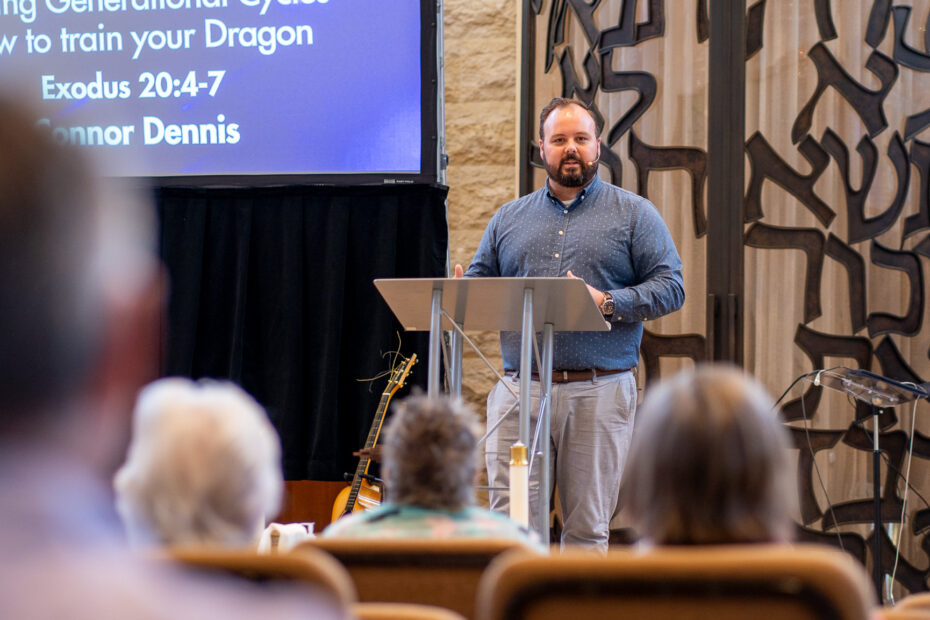
Our families are one of the most powerful forces shaping our lives. Even if you move away for college or settle in a new city, you’ll often catch yourself doing things the way your family always did—even if you never meant to.
Ever had that moment with a roommate or friend where you realize, “Wait, this thing my family does is…weird?” That realization can be funny. But there’s a deeper truth: so much of who we are—how we handle stress, conflict, success, disappointment—comes from patterns we learned at home.
As I’ve learned more about mental health, faith, and spiritual formation, one truth has become clear: our families of origin shape us in profound ways. Even things we never chose ourselves can follow us like invisible baggage—habits, attitudes, and cycles passed down like family heirlooms.
A Movie That Illustrates This: How to Train Your Dragon
One of my favorite illustrations of this dynamic is the How to Train Your Dragon series.
Hiccup is a young Viking born into a tribe with one clear mission: hunt and kill dragons. For generations, his people have seen dragons as monsters. His father, Stoick the Vast, is the chief of the village—and the epitome of a fierce dragon-slayer. He even lost his wife to a dragon attack. So this hatred isn’t abstract. It’s personal. It’s the family legacy.
But Hiccup is different. When he finally injures the most feared dragon of all—a Night Fury named Toothless—he doesn’t finish the kill. He sees fear in the dragon’s eyes that mirrors his own. And he makes a radical choice: he frees Toothless, helps him heal, and befriends him.
That single choice changes everything—not just for Hiccup, but for his whole village.
Trapped in Cycles We Didn’t Choose
Many of us live with inherited family patterns we never consciously chose. Patterns of:
- Addiction
- Anger
- Shame and silence
- Financial dysfunction
- Emotional avoidance
- Generational trauma
We may think, “That’s just how I am,” or “That’s how my family is.”
But what if God has a different story to tell?
What if faith isn’t about pretending everything’s fine—but about becoming the one who says: “This ends with me.”
Biblical Truths About Family Legacies
Author Pete Scazzero summarizes it this way:
“Jesus may be in your heart, but Grandpa is in your bones.”
Even if we belong to Christ, we still carry what we’ve learned from our families—good and bad. The Bible doesn’t shy away from this. It teaches two essential truths:
1) The blessings and sins of our families impact us for generations.
In Exodus 20, God warns:
“I, the Lord your God, am a jealous God, punishing the children for the sin of the parents to the third and fourth generation…but showing love to a thousand generations of those who love me and keep my commandments.”
Family patterns matter. Abraham’s faith blessed his descendants—but he also passed down habits of lying. King David’s violence led God to declare, “the sword will never depart from your house.”
2) True discipleship requires putting off sinful patterns and relearning life in God’s family.
Ephesians 4:22–24 says:
“Put off your old self…be made new in the attitude of your minds…put on the new self, created to be like God.”
Jesus invites us into a new family line, one that’s not defined by our past but by God’s grace.
Jesus Offers Freedom from Family Chains
Jesus himself challenged his listeners on this very issue. In John 8:
“If you hold to my teaching…you will know the truth, and the truth will set you free.”
They replied, “We are Abraham’s descendants and have never been slaves…”
Jesus replied, “Everyone who sins is a slave to sin…but if the Son sets you free, you will be free indeed.”
The religious leaders couldn’t see they were stuck in destructive patterns—even while boasting about their heritage.
Jesus calls us to something deeper. He warns that following him may mean rejecting inherited ways of thinking—even if that feels like betraying our families:
“Anyone who loves their father or mother more than me is not worthy of me…whoever finds their life will lose it, and whoever loses their life for my sake will find it.” (Matthew 10:37–39)
Breaking Cycles Is Hard—but Possible
When Hiccup refused to kill Toothless, his village didn’t cheer. His own father told him: “You are no Viking.”
Similarly, when you start confronting harmful family patterns, people may not understand. They might feel threatened or even see your change as a personal rejection.
But when the village faced a threat they couldn’t defeat alone, it was Hiccup—and the dragons—that saved them. His courage transformed everything.
A Biblical Example: Joseph
Scripture is full of people who broke generational cycles. Look at Joseph:
- Sold into slavery by jealous brothers
- Imprisoned in Egypt
- Could have repeated cycles of resentment and revenge
Instead, Joseph saw God’s bigger plan:
“You intended to harm me, but God intended it for good.” (Genesis 50:20)
Joseph processed his pain honestly. He didn’t bury it. He lived faithfully in Egypt, stewarded resources wisely, and ultimately saved not only Egypt but also the family that betrayed him.
Your Past Doesn’t Have to Define Your Future
Romans 12:2 says:
“Do not conform to the pattern of this world, but be transformed by the renewing of your mind.”
We cannot break these chains on our own. But through the power of Christ and the work of the Holy Spirit, we can be transformed.
Jesus grafts us into a new family line:
“I am the vine; you are the branches. If you remain in me and I in you, you will bear much fruit.” (John 15:5)
This is the freedom Jesus offers. Not freedom to pretend our past doesn’t matter—but freedom to break the cycles that would otherwise bind us and our children.
A Personal Note
For me, this isn’t abstract. My father wasn’t around. My grandfather wasn’t a good father either. But in Jesus—and through the community of the Church—I learned a better way. I saw what a good father could be.
It wasn’t easy work. It meant acknowledging what I’d inherited, grieving losses, learning new ways. But God was faithful.
Are You Brave Enough to Say “This Ends With Me”?
If you’re reading this and realizing you see some of these patterns in your own family history, take a moment:
- What cycles do you see repeating?
- How might they be holding you back from who God is calling you to be?
- What is something you feel unworthy to do because of your past?
Know this: You don’t have to do this alone.
Community matters. The church is meant to be a family where we help one another carry these heavy loads.
Jesus broke the power of sin so you don’t have to keep repeating the same mistakes. What you’ve learned from your upbringing doesn’t have to be what you pass on to your kids.
It starts with surrender. It starts with getting on your knees and saying:
“God, this ends with me. Help me. Heal me. Change me.”
And the good news?
“If the Son sets you free, you will be free indeed.” (John 8:36)
Reflection Questions
- What family patterns or cycles do you notice in your own life?
- How have these shaped you, for better or worse?
- Where might God be inviting you to say, “This ends with me”?
- Who can you invite to walk with you as you pursue change?
Closing Prayer
Lord, thank you that you see us fully, know our stories, and love us completely. Give us the courage to face what we’ve inherited honestly, the humility to seek your help, and the strength to walk in new ways. Help us be the generation that says “this ends with me,” so that those who come after us will know freedom and blessing in you. Amen.